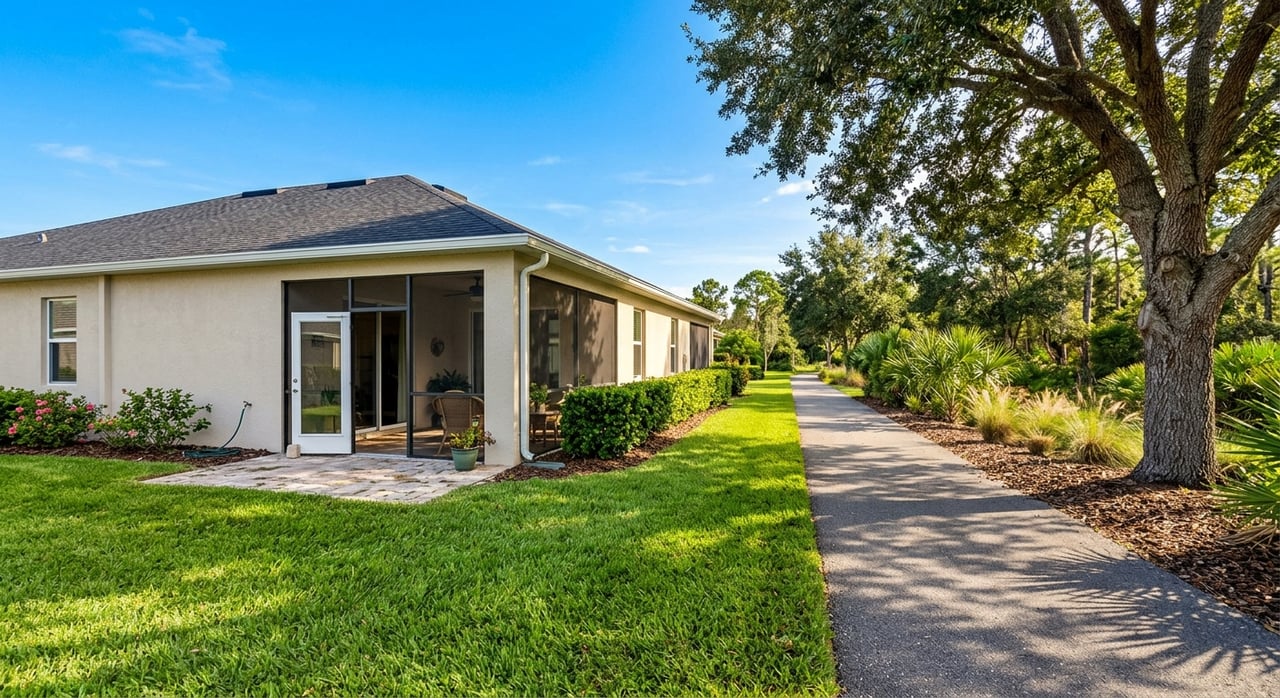
Buying a home in Lakeland and heard about the Florida Homestead Exemption? This benefit can lower your taxable value and help keep future tax increases in check. If you own or just moved, you likely want to know who qualifies, how to apply, and what “Save Our Homes” and portability mean for you. In this guide, you’ll get clear steps and trusted resources tailored to Polk County. Let’s dive in.
Homestead exemption at a glance
The Florida Homestead Exemption reduces the taxable value of a qualifying primary residence. For eligible owners, the standard exemption can reduce assessed or taxable value by up to $50,000. State rules define how that amount applies across different taxing authorities.
Your property must be your permanent, primary residence as of January 1 of the tax year. Applications are generally due by March 1. Polk County applications and eligibility determinations are handled by the Polk County Property Appraiser. You can find county guidance and forms on the Polk County Property Appraiser website.
For statewide explanations and forms, review the Florida Department of Revenue’s overview of Property Tax Exemptions.
Who qualifies in Lakeland
To qualify for the standard homestead exemption in Polk County, you typically need to:
- Own the property and show proof of ownership.
- Occupy the home as your permanent residence as of January 1 of the tax year.
- File an application with the Polk County Property Appraiser by March 1 and provide required documents.
Common documents include a deed or recorded ownership, a Florida driver’s license or ID with your Lakeland address, and proof of Florida residency such as vehicle or voter registration. Requirements can change, so always check the latest list on the Polk County Property Appraiser site.
Additional exemptions to consider
Beyond the standard homestead exemption, there may be separate exemptions for seniors, disabled persons, veterans, surviving spouses, and in some cases low-income seniors. Each has its own rules and forms. Review local criteria and availability with the Polk County Property Appraiser and confirm any deadlines before you apply.
Save Our Homes and taxable value
Florida’s Save Our Homes (SOH) is an assessment cap that works alongside the homestead exemption. Here is how it fits together:
- Just value is the market value estimated by the property appraiser as of January 1.
- Assessed value for homesteaded properties can differ from just value because SOH limits the annual increase in assessed value to the lesser of 3% or the change in the Consumer Price Index.
- Taxable value equals the assessed value minus exemptions, including the homestead exemption. Different taxing authorities may treat exemption bands differently based on state rules.
The net effect is powerful over time. When market values rise faster than the SOH cap, your assessed value tends to grow more slowly, which helps control future tax increases compared with a similar non-homesteaded property. Establishing homestead promptly after you move to Lakeland typically starts this protection early.
A simple example
- Assume just value on January 1 is $300,000. Year 1 assessed value is $300,000. After a $50,000 homestead exemption, taxable value is $250,000.
- If next year the market increases 10% to $330,000, SOH limits the assessed increase to 3% or CPI, whichever is lower. Assessed value becomes $309,000. After the $50,000 exemption, taxable value is $259,000.
Over time, if market values keep outpacing the SOH cap, the gap between market and assessed values grows. That gap, combined with the exemption, helps moderate your tax burden year to year.
Portability for movers within Florida
If you sell a homesteaded property in Florida and buy another Florida primary residence, you may be able to transfer part or all of your accumulated SOH benefit to the new homestead. Portability transfers the SOH assessment difference, not the homestead exemption itself.
To use portability in Polk County, you will establish the new property as your primary residence, apply for the homestead exemption, and claim portability during your application process. Limits and deadlines apply, and the amount you can transfer depends on the difference between the prior home’s market and assessed values. For current procedures and forms, contact the Polk County Property Appraiser and review the Florida Department of Revenue’s guidance on Property Tax Exemptions.
Step-by-step for Polk County owners
Confirm your status as of January 1. Your Lakeland home must be your permanent residence on January 1 to claim the exemption for that tax year.
Gather documents. Collect your deed or recorded ownership, Florida driver’s license or ID showing your Polk County address, vehicle registration or voter registration, and any other items the county requests.
Apply by March 1. File with the Polk County Property Appraiser. Check if online filing is available and follow the county’s instructions.
If you are moving from another Florida homestead, prepare portability. Gather your prior county’s assessments and closing documents and ask Polk County how to claim portability when you file your new homestead.
Keep records and verify online. Save copies of your application and any confirmations. Later, use the Polk PA parcel search to verify your assessed and taxable values.
Common mistakes to avoid
- Missing the March 1 application deadline.
- Assuming a second home or rental qualifies. Homestead is for a primary residence only.
- Overlooking the January 1 residency requirement.
- Forgetting to claim portability when you buy a new Florida primary residence.
- Not checking the Polk PA site for updated forms, procedures, or documentation requirements.
Local resources
- Polk County Property Appraiser: application instructions, parcel search, and contact details are on the official Polk PA site.
- Florida Department of Revenue: statewide rules and exemptions are outlined on the Property Tax Exemptions page.
Ready to make the most of your homestead benefits and plan your next move in Polk County? For local insight on neighborhoods, market values, and a smooth path from contract to closing, reach out to Cheryl Bossarte. We are here to help you navigate your options with confidence.
FAQs
What is the Florida Homestead Exemption and how much does it reduce taxes?
- The standard exemption can reduce assessed or taxable value by up to $50,000 for an eligible primary residence, which can lower your property tax bill compared with no exemption.
What is the Polk County deadline to apply for homestead?
- Applications are generally due by March 1 for the tax year; check the Polk County Property Appraiser site for current instructions.
How does Save Our Homes limit increases in assessed value?
- For homesteaded properties, the annual assessed value increase is capped at the lesser of 3% or the change in CPI, which helps moderate tax growth when market values rise quickly.
If I move to Lakeland after January 1, when can I claim homestead?
- You typically claim for the following tax year because you must occupy the home as your permanent residence as of January 1 to qualify for that year.
What documents do I need to file in Polk County?
- Expect proof of ownership plus Florida residency documents such as a driver’s license or ID with your Polk County address and vehicle or voter registration; confirm the latest list on the Polk PA site.
What does portability transfer when I buy another Florida home?
- Portability transfers some or all of your accumulated Save Our Homes assessment difference to the new Florida homestead, not the $50,000 exemption itself, subject to rules and deadlines.