You have more 55+ choices in Lakeland than ever, but that can make the search feel overwhelming. You want the right mix of low‑maintenance living, active amenities, and easy access to healthcare and everyday errands. This guide gives you a clear, step‑by‑step way to compare communities so you can choose with confidence. You’ll learn how ownership types affect maintenance, what to ask about HOA finances, and how to validate age rules, amenities, location, and risk. Let’s dive in.
Start with ownership and maintenance fit
Before you fall in love with a clubhouse or pool, confirm how the homes are owned and maintained. Ownership type drives what the HOA covers, your monthly costs, and how hands‑on your upkeep will be.
Condominiums
In a condo, you own the unit’s interior while the association owns and maintains the building exterior and shared elements. Condo fees are often higher because they include more services, and the association handles large‑scale items like roofs, exterior paint, and common systems. Florida condo law sets rules for budgets, reserves, and insurance that matter to buyers. Review the association’s insurance and reserve provisions under Florida Statute 718.111.
Typical condo inclusions can cover:
- Exterior building maintenance and roofs
- Landscaping and common‑area utilities
- Community amenities and management
- Sometimes water, trash, cable/internet (varies)
Fee‑simple homes and villas in HOAs
If you buy a single‑family home or attached villa in an HOA, you usually own the structure and the land. Fees can be lower, but owners often handle more items personally. Exact obligations come from the CC&Rs and rules under Florida HOA law (Chapter 720).
Common HOA patterns in 55+ settings:
- Community handles common areas, gates, amenities, and entry landscaping
- Owners handle roofs, exterior paint, and yard care, unless a sub‑association provides “lawn and exterior” services
- Some villas operate as near “lock‑and‑leave” with lawn and exterior maintenance included
Tip: Ask for a written “maintenance matrix” that lists what the association vs. the owner is responsible for.
Confirm the community is legally 55+
“55+” is a legal designation protected by the federal Housing for Older Persons Act (HOPA). To qualify, a community must keep written policies that show it intends to be 55+, follow HUD age‑verification procedures, and ensure that at least 80% of occupied homes have one resident age 55 or older. In Florida, guidance comes from the Florida Commission on Human Relations. Ask to see the community’s HOPA policies and last verification. Learn more from the Florida Commission on Human Relations HOPA page.
Amenities that match your days
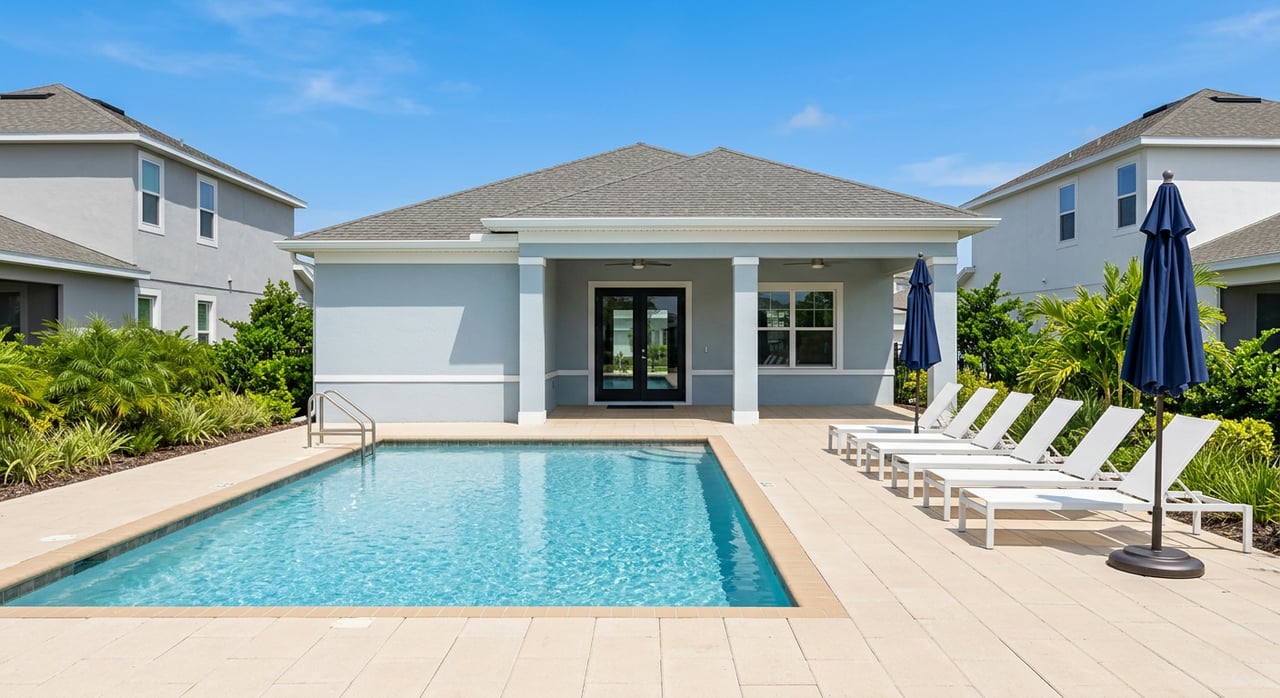
Most 55+ neighborhoods sell a lifestyle. Common features include clubhouses, fitness centers, pools, pickleball, walking trails, and an activity calendar with clubs and classes. More amenities can raise fees, but they can also boost resale appeal if they are well maintained and well used.
Lakeland also gives you a lively mix of off‑site options. Enjoy walking and birding at the Circle B Bar Reserve, stroll the Lake Mirror promenade, or visit Hollis Garden and Bonnet Springs Park for events and cultural programs. Think about how often you will use on‑site vs. nearby amenities.
Questions to ask about amenities:
- What is the actual amenity list, and what’s included in the fee vs. pay‑to‑play?
- Is there an activity director or volunteer committees that keep the calendar fresh?
- What are typical hours, guest policies, and capacity during peak times?
- How old are key facilities, and are upgrades planned or funded?
Healthcare access matters
Proximity to clinics, specialists, and emergency care is a top priority for many 55+ buyers. Lakeland is served by Lakeland Regional Health, a major local hospital and specialty hub. See the facility overview for Lakeland Regional Medical Center. Watson Clinic is also expanding, with the Orlando Health Watson Clinic Lakeland Highlands Hospital slated to open in 2026, a meaningful boost to capacity. Read the Watson Clinic campus announcement.
Practical tip: Drive from any community you’re considering to the nearest ER, primary care clinic, and pharmacy during busy and quiet times. Time the route both ways.
Location, transportation, and everyday errands
Lakeland sits on the I‑4 corridor between Tampa and Orlando, which is handy for airport access and family visits. Drive times can vary with traffic, so always check conditions. Local options include the Citrus Connection bus network, an Amtrak stop in downtown Lakeland, and the Lakeland Linder airport for regional flights. Map out your regular errands, favorite parks, and faith or volunteer activities to confirm the daily rhythm feels right.
HOA finances, reserves, and insurance
A community’s financial health is as important as its curb appeal. Two quick indicators to review are the current budget and the most recent reserve study. Reserve studies estimate long‑term repair and replacement costs for roofs, roads, paint, clubhouse systems, and more. They also show a “percent funded” metric. Low reserves or frequent special assessments are red flags. For a plain‑English primer, see this reserve study overview.
Florida association law requires records access for owners, and condominium statutes include detailed reserve and insurance provisions. If you are buying into an HOA, review your rights and required records under Florida Statute Chapter 720. For condos, check reserve and insurance rules under 718.111.
Insurance context: Florida’s homeowners insurance market has been volatile, though recent reports suggest carrier appetite is improving. Still, premiums vary by building type and location. Read a summary of trends in Florida homeowners insurance. Always get quotes early, confirm what the HOA’s master policy covers, and verify your unit or home’s required coverage.
Understand natural hazards and flood risk
Even inland communities in Polk County can see localized flooding and heavy storms. Check the property’s flood zone and any community history of storm damage. Polk County’s floodplain page links to FEMA maps and local guidance on mitigation and insurance. Start here: Polk County floodplain and FEMA guidance.
Key questions:
- Is the home in a Special Flood Hazard Area? If so, how much is typical flood insurance?
- What does the HOA’s master policy cover for wind and hail? What are deductibles?
- Has the association filed large storm‑related claims in the past 5 to 10 years?
Your document checklist
Request these before you make a serious offer:
- Association governing documents: Declaration/CC&Rs, Bylaws, Rules and Regulations
- Financial package: current budget, most recent financial statements and audit/review, current reserve study, reserve balance, delinquency report, and special assessment history
- Insurance declarations: master policy coverages, deductibles, wind/hurricane details, and any owner requirements
- Resale disclosures: for condos, the standard Florida resale package; for HOAs, an equivalent buyer packet or estoppel information
- Board minutes and litigation disclosures: at least 12 to 24 months of minutes and a summary of any pending or threatened claims
Questions to ask the community
Use these to compare apples to apples:
- Age and occupancy rules: Is the community HOPA‑qualified as 55+? Can you show the written HOPA policies and the most recent age‑verification? Learn more from the Florida HOPA page.
- Fees and inclusions: What is the current monthly or quarterly fee? Exactly what does it cover? Can I see a three‑year fee history?
- Reserves and projects: When was the last reserve study? What is the current reserve balance and percent funded? Any major projects or special assessments planned?
- Insurance details: What does the master policy cover? What are deductibles? Are individual owners required to carry specific coverage?
- Governance and turnover: Is the board homeowner‑controlled or still under developer control? Is management in‑house or third‑party? Review rights and records under Chapter 720.
- Daily‑life rules: What are the policies on guests, under‑55 visitors, pets, vehicles, exterior changes, and satellite dishes?
- Rentals and transfers: Are there rental caps, waiting periods, or transfer fees that affect my plans?
- Accessibility: Are common areas friendly to mobility devices? How are elevators or ramps maintained? Can I make in‑home accessibility modifications?
On‑site checks that tell the truth
- Visit three times: weekday daytime, a weekday evening, and a weekend morning.
- Walk the amenities and ask a resident how busy they get in season.
- Join or observe a social event or class if possible.
- Drive the route to the nearest ER, clinic, pharmacy, and grocery at peak and off‑peak hours.
A quick snapshot of Lakeland’s 55+ backdrop
Lakeland skews older than the national average, with about 21.5% of residents aged 65 or over. Owner‑occupied housing runs around 56%, and the median owner‑occupied value sits in the low $200Ks, helpful benchmarks when you compare price tiers and HOA fees. See the latest figures on U.S. Census QuickFacts for Lakeland.
How a local guide makes this simpler
A patient, local agent can speed up the process by pulling resale packets, explaining budgets and reserve studies in plain language, calling managers for answers, and timing tours around community events. Polk Real Estate’s neighborhood‑first approach across Polk County means you get clear advice, not sales pressure, and hands‑on help from first showing to closing.
Ready to build a short list and see how the communities feel in person? Reach out to Cheryl Bossarte for a friendly, no‑rush consultation.
FAQs
What does “55+” legally mean in Florida housing?
- HOPA allows age‑restricted housing if at least 80% of occupied homes have one resident 55 or older, with written policies and age‑verification; see the Florida HOPA guidance.
How do condo and HOA fees differ in Lakeland 55+ communities?
- Condos often include exterior upkeep and big systems, so fees can be higher; HOAs for fee‑simple homes may cost less but leave more maintenance to you; condo reserve and insurance rules appear in 718.111.
Are Lakeland 55+ communities close to hospitals and clinics?
- Yes; Lakeland Regional Health is the primary hospital, and the Orlando Health Watson Clinic Lakeland Highlands Hospital is planned for 2026; see Lakeland Regional Medical Center and the Watson Clinic expansion.
Do I need flood insurance for a 55+ home in Polk County?
- It depends on the property’s flood zone and lender requirements; check county resources and FEMA maps via Polk County floodplain guidance, then get quotes early.
Can grandchildren stay overnight in a 55+ community?
- Usually yes, for limited periods, but specifics vary by community; ask for the rules on guest stays and under‑55 visitors and review the written policies during due diligence.