Dreaming of a home that feels like vacation, without giving up everyday convenience? In Davenport, many neighborhoods promise “resort-style” living, but not all amenities, rules, or fees are the same. If you understand how these communities work, you can match your lifestyle and budget with confidence. This guide breaks down the community types, who controls amenities, what fees to expect, and how short-term rentals are handled. Let’s dive in.
What “resort-style” means in Davenport
“Resort-style” is a marketing phrase that can mean very different things from one neighborhood to the next. In Davenport, you’ll see four common setups.
Purpose-built vacation resorts
These master-planned communities center around a large clubhouse, water features like a lazy river, fitness rooms, and often a 24-hour gate. Many were designed for short-term rental investors and include furnished homes with private pools. Community rules often outline how owners and renters access amenities, as shown in the Solterra Resort CDD’s published amenity policies that explain owner and renter access procedures and fees (see Solterra’s amenity rules).
Golf or club-centered neighborhoods
Some gated communities are built around a private golf club or resort experience. Amenities may require a separate club membership with its own dues, in addition to HOA fees. For example, the golf clubhouse at Providence provides membership options that sit outside typical HOA assessments (learn more about Providence Golf Club).
Standard HOA neighborhoods using “resort-style”
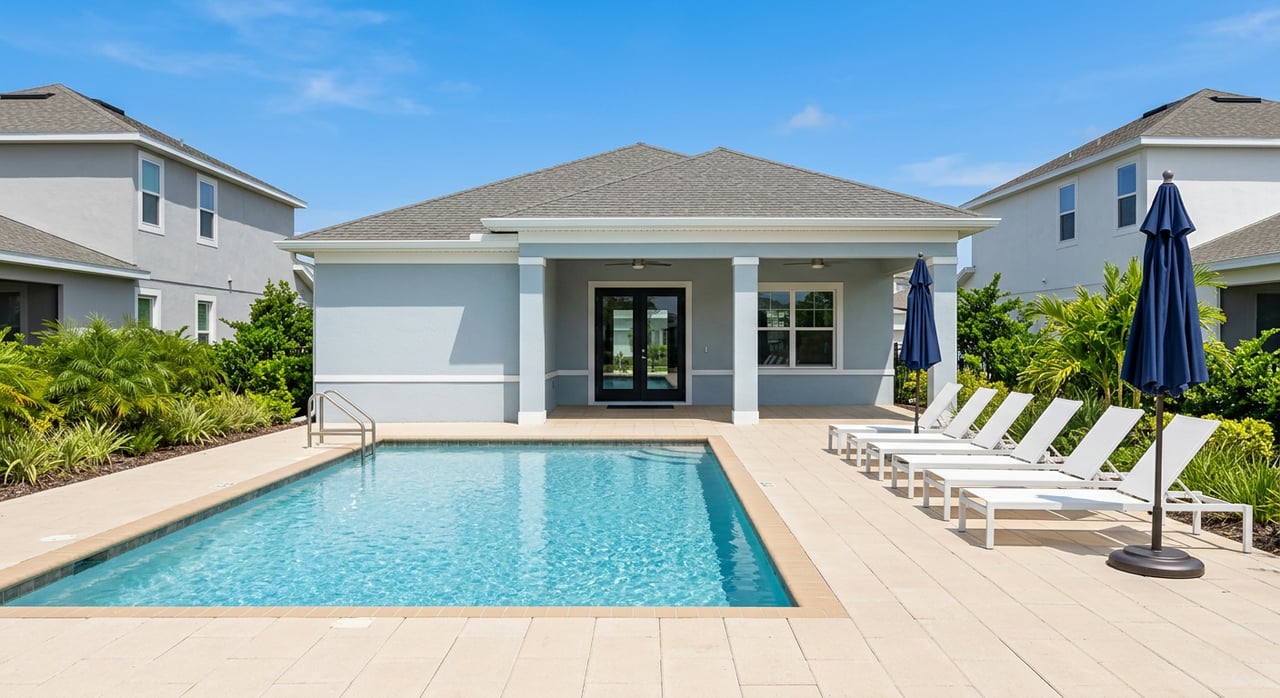
Many smaller subdivisions market a pool, clubhouse, and playground as “resort-style.” That can be a great fit if you want simple amenities without a big operations budget. Always confirm the actual amenity list and hours, and ask if non-resident guests or renters pay user fees.
Condos and resort-hotel hybrids
Some buildings tie into a broader resort network or rental program. Access to certain amenities may depend on buying a membership or using an approved rental program. Terms vary widely, so it pays to read the fine print before you buy.
Who controls amenities and rules
Amenities and rental rules are shaped by a few layers of governance. Knowing who does what helps you anticipate access, costs, and enforcement.
Homeowners’ associations (HOAs)
HOAs enforce covenants, collect dues, and operate facilities they own. Florida’s HOA statute outlines association powers and procedures (Florida HOA statute, Chapter 720). Leasing restrictions may be included in recorded documents and can affect how often or how long you can rent. Always review the CC&Rs and amendments for the specific property.
Condominium associations
Condo associations manage buildings and common elements and tend to have more detailed guest and amenity rules. They also follow a different statute than HOAs, so expect different protections and procedures. If you are considering a condo, review monthly fees and house rules closely.
Community Development Districts (CDDs)
A CDD is a special local government authorized to build and operate infrastructure and amenities like roads, lakes, and clubhouses. CDDs issue bonds and collect annual assessments that appear on your county tax bill as non-ad valorem lines. These charges are separate from HOA dues (Florida CDD statute, Chapter 190).
Master and sub-associations
Many master-planned areas have a master association for main entries and large amenities, plus sub-HOAs for neighborhood landscaping and local rules. This layered model often means more than one assessment line. Clarify what each association covers and who enforces which rules.
Fees you will encounter
Understanding the full cost of ownership is key. Fees vary by community structure and by whether amenities are run by an HOA, a CDD, or a private club.
HOA or condo assessments
Regular dues fund daily operations like pool upkeep, landscaping, insurance for common areas, and management. Healthy budgets include reserves for future repairs. Industry guidance suggests reviewing the budget and any reserve study to gauge the risk of special assessments (what HOA fees cover).
Special assessments and reserves
Special assessments are one-time charges for big projects such as roof work, resurfacing pools, or paving. A current reserve study shows the plan for large replacements and whether reserves are adequate. Low reserves can increase the likelihood of special assessments (learn about reserves).
CDD assessments on your tax bill
If a community uses a CDD, you will see two potential lines on your property tax statement: debt service for bonds and operations and maintenance. These are separate from HOA dues and can significantly impact annual costs (CDD overview, Chapter 190).
Club memberships
In golf or resort-club neighborhoods, access may require an initiation fee and annual dues, separate from any HOA. Some listings advertise a membership benefit, but what transfers can vary. Verify whether membership is mandatory, optional, or time-limited (Providence Golf Club membership info).
Short-term rental taxes and filings
Florida treats a home as a transient public lodging establishment when it is rented more than three times in a year for periods under 30 days. That threshold triggers state licensing and inspection requirements (Florida’s transient lodging definition). In Polk County, short-term rentals owe a 5% Tourist Development Tax, and hosts also collect state sales tax and any county discretionary surtax (Polk County TDT guidance).
Short-term rentals in Davenport
If you plan to rent your property, rules differ by neighborhood and by local jurisdiction.
- State threshold: More than three rentals per year for under 30 days makes a property a transient public lodging establishment, which requires state licensing and compliance with inspections (Chapter 509).
- Local taxes and registration: Polk County collects a 5% TDT on short-term stays. The City of Davenport also maintains zoning and business tax receipt processes for certain business uses, including vacation rentals. Always verify the property’s location and the correct jurisdiction before you register (City of Davenport business tax info).
- Policy updates: A 2024 bill that would have centralized vacation-rental rules statewide was vetoed, which keeps meaningful authority at the local level for now. That makes city, county, and association documents the decisive sources for what is allowed (coverage of the 2024 veto).
How amenities and rules affect daily life and resale
The amenity package, operating model, and rental permissions shape daily life, budget, and future value.
- Full-service resort centers draw short-stay visitors and investors, but they usually carry higher operating budgets, user fees, and detailed guest rules. That can mean more structure around hours, passes, and access for non-residents (example amenity rules).
- Communities that allow frequent short-term rentals may see more guest turnover and parking patterns tailored to vacation stays. Neighborhoods with longer lease minimums often see steadier occupancy. Your preference should match your lifestyle and goals (Florida HOA framework).
- Layered assessments matter for affordability. A master HOA, a sub-HOA, and a CDD can add up. Strong reserves and a clear budget reduce the risk of surprise special assessments (CDD overview).
Your due diligence checklist
Before you fall in love with a pool or lazy river, ask for documents that show the full picture. These items help you compare apples to apples across Davenport communities.
- Recorded CC&Rs, bylaws, and amendments. Look for rental rules, lease minimums, and guest policies.
- Current budget, recent financials, and the latest reserve study. Healthy reserves help avoid special assessments.
- Meeting minutes for the last 12 months. You will see enforcement trends and planned projects.
- Estoppel or payoff letter. Confirms any outstanding or pending assessments at closing.
- CDD adopted budget and per-parcel assessment schedule, if applicable. These appear on your tax bill as non-ad valorem lines (CDD statute overview).
- Amenity and guest rules. Ask how renter access, guest passes, and non-resident fees work (example CDD amenity rules).
- Club or resort membership terms. Confirm whether membership is mandatory, optional, transferable, and what it costs (Providence Golf Club).
- Short-term rental compliance evidence. This includes state licensing, Polk County TDT registration, and any local business tax receipt if required (Polk TDT; City business tax info).
Decode common listing phrases
Marketing language can be helpful, but always verify the details.
- “Resort-style”: Could be a simple pool and small clubhouse or a full amenity campus. Get the full amenity list and ask about guest and renter access policies (sample amenity policy).
- “Gated community”: May be unmanned electronic access or a staffed gate. Service level and cost vary. Confirm whether gate costs are included in dues.
- “Maintenance-free” or “lawn care included”: Usually covers exterior landscaping within scope. It does not include interior maintenance or utilities. Check the budget and rules.
- “Resort membership included”: Memberships can be conditional, time-limited, or subject to transfer fees. Verify exactly what transfers at closing and any balances due (golf club example).
Next steps
- Clarify your lifestyle goals. Decide if you want a high-energy resort environment or a quieter neighborhood with simple amenities.
- Map your full budget. Include HOA or condo dues, any CDD assessments on the tax bill, club memberships, and insurance.
- Confirm rental plans. If you want short-term rental flexibility, verify the HOA, CDD, and local rules first.
- Compare communities. Use the checklist above and ask for documents early in your search.
If you want a clear, local view of Davenport’s resort-style options, we are here to help. For hands-on guidance, neighborhood insights, and thoughtful comparisons, connect with Cheryl Bossarte to start your search with confidence.
FAQs
What is a CDD fee in Davenport resort communities?
- A Community Development District collects non-ad valorem assessments on your property tax bill to pay for infrastructure and amenities. These charges are separate from HOA dues and can include debt service and operations (Chapter 190 overview).
Are short-term rentals allowed in all Davenport “resort-style” neighborhoods?
- No. Permission depends on the HOA or condo documents and any local rules. Florida also classifies a home as transient lodging when rented more than three times per year for under 30 days, which triggers licensing and taxes (state definition).
How much tourist tax will I collect on vacation rentals in Polk County?
- Polk County imposes a 5% Tourist Development Tax on transient stays, in addition to state sales tax and any county discretionary surtax. Owners are responsible for registration and remittance (Polk TDT guidance).
Do “resort memberships included” always transfer to the buyer?
- Not always. Some memberships are optional, time-limited, or have transfer fees. Always get written details on whether the membership is mandatory, transferrable, and the current cost schedule (golf club example).
What should I review before buying in a resort-style community?
- Request CC&Rs and amendments, budgets and reserve studies, meeting minutes, any estoppel letter, CDD assessment schedules, amenity rules, and proof of short-term rental compliance where applicable.